Showing posts with label Migrant workers. Show all posts

Friday, 16 September 2016

Holocaust Memorial Day Commemoration: Saturday, January 28th 2017

The text of my HMD presentation to the Wellingborough commemorative event held on Saturday January 28th 2017 at the Wellingborough Museum

Good morning. Thank you for this opportunity to give this presentation to you today. It’s an honour and privilege and I hope that you find it interesting, but also challenging – for which I don’t apologise!

Yesterday was Holocaust Memorial Day which is commemorated on 27 January every year in commemoration of the liberation of Auschwitz extermination camp in Poland by Russian/Soviet troops in 1945 towards the end of the Second World War.

What was the Holocaust?

Between 1941 and 1945, the Nazis attempted to kill all of Europe’s Jews. This systematic and planned attempt to murder all Jewish people in Europe is known as the Holocaust (The Shoah in Hebrew) and it is unique in Human history. The first time an attempt was made to eliminate a whole group of people based on their religion/race/ethnicity using the whole apparatus of a modern state and society.

The holocaust also resulted in the murder of millions more as a result of prejudice and hatred: homosexuals, Gypsies, Jehovah’s Witnesses, disabled people, Black people and other ethnic minorities, and political opponents of the Nazis.

From the time they assumed power in 1933, the Nazis used propaganda, persecution, and legislation to deny human and civil rights to Jews and other groups. They used centuries of antisemitism (hatred of Jewish people) as their foundation and new pseudo-scientific ideas of eugenics and the notation iof creating a “perfect human being”. By the end of the Holocaust, six million Jewish men, women and children had either perished in ghettos or through mass-shootings, in concentration camps and by gassing in extermination camps, such as Auschwitz.

Can you imagine what six million people looks like? It’s hard. That’s at least 200+ football stadiums (with 30,000 capacities each) or 100 towns the size of Wellingborough: women, men, children and older people, all murdered.

Ivor Perl

Today we are going to watch a short film clip, in which this man, Ivor Perl, who was born in Hungary, tells us his experiences during the Holocaust.


Watching Ivor’s film tells us about the stories beyond those statistics which are too huge for us to comprehend. It tells us that the Holocaust was the story of Jewish people being forced to move from their own homes to ghettos and camps. Of families being forced apart. Of the diseases like typhus which were allowed to spread as people were forced to live in appalling conditions. And his story tells us that half of Hungary’s Jewish population were killed in only four months in 1944, and that Ivor himself lost all but one of his 8 brothers and sisters, and both of his parents.

Ivor’s testimony also tells us that, for Ivor, the legacy of the Holocaust continues. He tells us that he fears people more than he fears God; it was people who played with him as friends one week and on the second week herded him and his family into a ghetto. He speaks of his daily reminders of things which happened to him in the past.

But he also speaks of his delight at moving to the UK and beginning to set up a life here, displaying so proudly in his home the pictures of his children and grandchildren. He tells us about his talks in schools and community groups, and that he feels if only one person hears his story and makes a difference, it was worth his while.

There are hundreds of us here today. On Holocaust Memorial Day we can reflect on the ways in which we can make a difference after hearing Ivor’s testimony. We can reflect on the particular questions that Ivor asked in the film.

What has it helped?

He asks ’What has the world learned since 1945?’ and, sadly, since the end of World War Two, there have been genocides in Cambodia, Rwanda, Bosnia, and Darfur where millions of people have been murdered simply because of who they are. This suggests the world has not learnt much. So what can we learn?

Our understanding of social psychology – how our brains work within a social context - might have some of the answers. This tells us that all human beings (you, me, and others) are all capable, given the wrong/right circumstances, of committing great crimes and horrors. Genocides and human rights abuses are not committed by evil people, but by people, just like you and me, doing evil thinks to other human beings.

  • Playing the “us”/“them” game of stigmatising groups in society who we don’t like or blaming for all our problems. Or holding prejudicial or stereotyped views of such groups. We do this easily and almost automatically, without thought. We are easily seduced by the lies and misrepresentations of unprincipled politicians hungry for votes and power who tell us such groups are to blame. And what groups are in the frame in today’s world for such demonisation and hatred?  Mexicans (in the US), Muslims, refugees, immigrants, migrants from the European Union, asylum-seekers, benefit scroungers... you can add your own favourites if you like as more are added on an almost daily basis as we split up into our own clans and comfortable zones of exclusion behind walls, borders and fences – physical structures - but possibly even more damaging divisions in our minds and thoughts. Us and them... it’s an easy game to play, but with disastrous consequences.

  • Inflicting harm on “others”, especially those who are stigmatised: being blind to their suffering or actively creating the conditions in which harm is done: harassment and hate crimes; our indifference or even hostility to hundreds of thousands of refugees, some of whom are dying in the Mediterranean or freezing to death in Serbia or Greece, or living in dire conditions in concentrations camps at the borders of Hungary; our indifference to disabled people who are dying or committing suicide because of the dehumanising nature of our benefit system; physical attacks on Polish people, or Muslims, or indeed anyone who stands up for minorities and the vulnerable – such as MP Jo Cox.

  •  But I hear you say: “we wouldn’t do that, we wouldn’t do harm to others”. But what would you do I ask?


How would I have behaved?

·        Ivor Perl asks us to reflect on our own actions or inactions. Do we/you stand by and watch, or do you say “no, this is wrong, it must stop!”? Do you actively get involved in challenging prejudice and injustices? Would you stand up or would you remain silent?

Ivor asked ‘how would I have behaved if I had been the gentile (the person who was not Jewish)?’ We can also ask ourselves ‘what would I have done if I had seen my neighbours forced out of their homes and onto trains or into ghettoes simply for who they were? Would I have stood by? Or would I have spoken out?’ The Holocaust was allowed to happen because the people with the power and the knowledge to stop it stood by and did nothing.

So in the contemporary world we need to ask: what am I doing?

Elie Wiesel

At the end of Ivor’s film he says ‘the only thing we can do is not answer hate with hate.’ Perhaps we can challenge ourselves to go even further.

As Elie Wiesel, another Holocaust survivor, wrote:

‘I swore never to be silent whenever and wherever human beings endure suffering and humiliation. We must always take sides. Neutrality helps the oppressor, never the victim. Silence encourages the tormentor, never the tormented.

Don’t stand by

With the words of Ivor Perl and Elie Wiesel in mind, with our understanding of human psychology in mind, I would ask you today to commit to not standing by.

When we see acts of injustice, don’t stand by. When we hear of intolerance, don’t stand by. When we see people being picked on because of who they are, don’t stand by. And when we see others act on their hatred, don’t stand by. And, if and when we see others “not standing by” and challenging, support them too – especially if we don’t have the courage to do it ourselves.

If we can all make the commitment today that we will not stand by when others face prejudice, perhaps we can help the world learn lessons from the past to create a better, safer future.

HMD 2017 Film

I would like to finish with another short film that has been produced for HMD 2017. It challenges us to think about how we can support those who face hostility today and create a safer society together.


Friday, 1 August 2014

Race equality activists and campaigners demand better political leadership on issues such as race equality and immigration.

Open letter
In an unprecedented move race equality activists and campaigners have written to each of the main party leaders to demand better political leadership on issues such as race equality and immigration.
Tackling race inequality has all but fallen off the political agenda and the Immigration debate can only be characterised as a race to the bottom of a dirty barrel. The signatories also lament the silent, self-imposed toothless Equality and Human Rights Commission. Please feel free to join the debate and put your name to the list of signatories. To add your name email: razia63@hotmail.co.uk

See also:
http://blackactivistsrisingagainstcuts.blogspot.co.uk/2014/07/press-release-open-letter-about-racism.html

http://www.obv.org.uk/news-blogs/uk-political-leaders-don-t-shame-us

http://www.migrantsrights.org.uk/news/2014/race-equality-organisations-call-party-leaders-raise-tone-public-discussion

Dear Mr. Cameron, Mr Miliband, and Mr Clegg,
We are proud to live in a diverse Britain. Our society is more vibrant, dynamic and creative: our lives and values are richer for it. It is the reason behind London’s commercial success and why we secured the 2012 Olympics.
How quickly pride turns to shame.
We are now deeply worried about race relations, the rising tide of Islamophobia and anti-immigrant sentiment, which are fuelled by the open disdain shown by many politicians for policies which promote a more equal and inclusive society. We are ashamed of:-
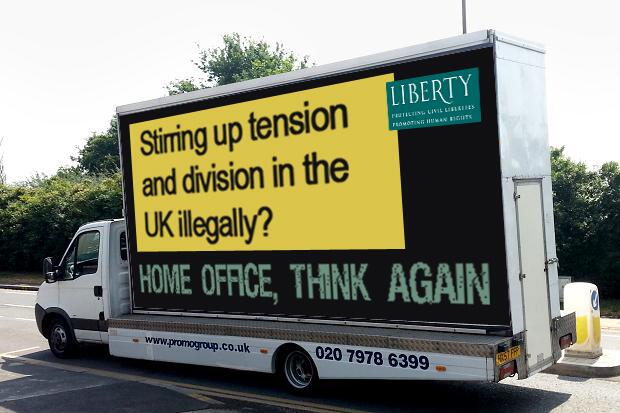
  • ‘Go home’ immigration vans
  • the vilification of migrant workers
  • the persistent linking of Muslim communities with violent extremism
  • the ‘British’ values agenda
  • institutional tolerance of celebrity racism
  • the refusal of political leaders to challenge hostile attitudes to particular sections of the black and other minority ethnic communities.
The reins on racist behaviour have been loosened: anti-immigrant and Islamophobic fervour, propagated by certain sections of the media and some politicians are in danger of unwittingly – and at times wittingly - inciting racial hatred. It is now open season for racists.
There is an Equality and Human Rights Commission, but it is silent, weak, aloof and ineffective. There is a Government Equalities Office but it has no vision for an inclusive society beyond women on boards. There are political leaders but no leadership.
This toxic environment is damaging British society and, potentially, its international reputation. We urge you to take immediate action to avoid serious harm to community relations by:
  • a commitment not to use the politics of ‘difference’ to marginalise communities
  • the release of the GEO Programme Fund to projects which promote good relations
  • a manifesto commitment to implementing a race and good relations strategy
  • restoring the power to promote good relations to the Equality and Human Rights Commission and ensuring that the EHRC uses its powers effectively.
Above all, we ask you not to choke the voice of reason and tolerance.
And, in case you think we do not matter, remember that the ethnic minority vote matters in key marginal constituencies.
Yours sincerely,
Organisations:
Zita Holbourne Co-Founder, BARAC
Sado Jirde, Director, Black South West Network
Belfast Migrant Centre
Tony Lindsay Project Manager, CHESS
Serah Kimuyu, Advice and Support Officer, Central Scotland Regional Equality Council (CSREC)
Professor Nira Yuval Davis, Director, The Centre for Research on Migration Refugees and Belonging, University of East London
Sarah Soyei, Head of Partnerships, EqualiTeach
Karen Chouhan Founder and Director Equanomics UK
Sameena Choudry Founder, Equitable Education
Chris Whitwell Director, Friends, Families and Travellers
Kamaljeet Jandu, National Officer, GMB
Robin Richardson Director, Insted Consultancy
Liz Fekete Executive Director, Institute of Race Relations
Ratna Lachman Director JUST West Yorkshire
Peter Williams, Chair, Kingsgate Community Centre
Don Flynn, Director, Migrant Rights Network
Suresh Grover Founder and Director,The Monitoring Group
Patrick Yu, Director, Northern Ireland Council for Ethnic Minorities,
Paul Crofts, Vice Chair, Northamptonshire Rights and Equality Council
Janie Codona MBE One Voice 4 Travellers Ltd
Simon Woolley, Director, Operation Black Vote
Andy Gregg, Chief Executive, Race On The Agenda
Omar Khan, Director, The Runnymede Trust
Peter Herbert, Chair, The Society of Black Lawyers
Joy Warmington, CEO, Birmingham Race Action Partnership
Individuals:
Olu Alake
Mohammed Aziz
Maud Blair
Ralph Braunholtz
Liz Brooker
Barbara Cohen
Dr. Tony Cotton
Dr. Jacqui Cousins
Lindsay Edkins
Angela Crum Ewing
Alison Graham
John Haywood
Ibrahim Hashi Jama
Makbool Javaid
Saleema Karim
Jane Lane
Harmesh Lakhanpaul OBE
Esther Maynard,
Mahalia France Mir
Rehana Minhas
Sarah McMurchie
Leander Neckles
Graham O’Neill
Brenda Parkes
Phil Pavey
Constantia Pennie
Professor Andy Plikington
Anthony Robinson
Pamela Strangman
Professor Sally Tomlinson
*******

Wednesday, 27 March 2013

Racism and Social Work Practice: Book launch Invitation


Book launch Invitation

Come and Join us in the launch of 
Anti-racism in Social Work Practice
 
Image of book cover Racism and Social Work Practice

The Social Work Division at the University of Northampton are are delighted to invite you to a book launch event on
 
16th May 2013 at 5.00pm

Sunley Management Centre 
The University of Northampton 
Park Campus 
Boughton Green Road 
Northampton NN2 7AL
Chapter authors: Angie Bartoli (Editor), Sue Kennedy, Prospera Tedam, Sukhwinder Singh, Bernadette Curran, Paul Crofts and Charity Chukwuemeka

Please circulate to others who also may be interested in attending.  

Due to catering please confirm your attendance to 
Karen.haines@northampton.ac.uk by 6th May 2013

Click here for more information about the book.

*****

Friday, 18 January 2013

Small victory against the dehumanisation of those on benefits


Following my previous blog "No Pets. No DSS": the demonisation of a new group? I have been informed that the Estate Agents concerned have now withdrawn use of this phrase from their window adverts.

This was reported in the Herald and Post newspaper this week.


This small victory does, however, hide a bigger injustice that continues: the discrimination, by landlords and estate agents, against renting property to those on housing benefits, or in  receipt of other social security benefits. I remain concerned that the poorest in our society are now effectively being excluded from any form of housing provision except that provided by councils or social landlords, who are managing larger and larger waiting lists. Where will the poorest in our society live in the future?

Isn't this situation also a recipe for community conflicts? No doubt the hate-mongers in our society and populist politicians will look around for other groups to scape-goat and blame for the housing shortages.  No doubt some people on benefits, having been stigmatised themselves as "scroungers" and discriminated against, may be persuaded to blame other groups for their predicament as a consequence. On this weeks BBC Questiontime we had a taster: new immigrants from the European Union  (this time Bulgaria and Romania rather than Poland!). Historically many other groups were demonised in exactly the same way: the Irish, Jews, Black people from the Caribbean and Africa, Asians from Bangladesh and Pakistan ... all at one time or another blamed for causing housing shortages over the past 100 years or more!

A week-on-Sunday (January 27th) it will be Holocaust Memorial Day. If there is one single important lesson for today from the holocaust (and there are of course many lessons) it is that the stigmatisation and dehumanisation of any group in our society is morally and ethically wrong and can lead on to gross human rights abuses, if not actual genocide. I hope that during the commemorations this year we will make an explicit commitment to reject the demonisation of people on benefits that is taking place in our society at present and the scape-goating of "immigrants", where ever they may be from.

******

Friday, 23 March 2012

Guest Post: Racism and discrimination still pervasive across Europe against backdrop of economic downturn


At a time of  economic crisis, migrants and ethnic minorities are disproportionately affected by  unemployment and precarious working conditions. Economic downturn also creates fears among the general public that incite racist behaviour, while it has led to financial cuts to anti-racism activities in many countries. These are some of the conclusions of
European Network Against Racism’s Shadow Report  on racism in Europe 2010-2011, released on March 21st - UN International Day Against Racism.

Economic turmoil has resulted in increased unemployment across the board, but in particular for ethnic minorities. In Spain for instance, the highest unemployment rates are found among migrants from Morocco and Sub-Saharan countries (with figures close to 50% during the second quarter of 2010).

Several countries also highlight the negative impact of financial cuts on anti-discrimination efforts. In Lithuania, for instance, the national anti-discrimination programme for 2009-2011 received less than 1% of the funding which was initially planned for 2010.

In addition, racially motivated violence committed both by neo-Nazi groups and other perpetrators is on the rise, in parallel to a growing success of far right parties and movements, for instance in the United Kingdom,
Denmark, Hungary, Greece and Poland.

The report also highlights that people of African descent are particularly vulnerable to racism and racial discrimination in several EU Member States, and their visibility heightens this vulnerability.  In the United Kingdom for instance, black people are at least six times more likely to be stopped and searched than a white person. In Latvia, most members of the African community hold university diplomas but few are able to find a job that c

Although EU Member States have transposed EU anti-discrimination legislation into national law, few cases are brought forward and the legal provisions are often not implemented in practice. In most EU countries, there also a shift towards more restrictive migration policies with states seeking to borders, and of those seeking the right to reside within EU territory.

ENAR Chair Chibo Onyeji said:
“Today in particular, on International Day Against Racism, it is worrying to see that racism and discrimination continue to be so pervasive across the EU. Politicians must convey the message that equal access to jobs, housing and schooling are crucial to build a prosperous and cohesive society - all the more so in an economic crisis. We cannot afford to leave whole sections of the population on the sidelines.”
For further information, contact:
European Network Against Racism
Georgina Siklossy, Communication and Press Officer
Tel: +32 (0)2 229 35 70 - Mobile: +32 (0)473 490531 - E-mail: georgina@enar-eu.org - Web: www.enar-eu.org

Brussels, 21 March 2012

*********************

Tuesday, 4 January 2011

Jayaben Desai: Inspirational leader


See Guardian obituary to this wonderful and inspirational leader of the Grunwick strike in the mid-1970s: http://tiny.cc/64pgd.


See also: http://bit.ly/eN1CP8

***********

Tuesday, 26 October 2010

Immigration: Good or Bad for Northamptonshire? A roundtable discussion.

A roundtable discussion will be held on this theme on Thursday November 11th 8.00pm in the Victoria Centre, Palk Road, Wellingborough.


Speakers:
Terry Spencer, Parliamentary candidate in the general election for the English Democrats
Prof. Andy Pilkington, Professor of Sociology, University of Northampton
Anjona Roy, Chief Executive, Northamptonshire Rights & Equality Council
Melanie Crofts, Senior Lecturer in Immigration & Nationality Law, University of Northampton
Chair: Martin Heath, BBC Radio Northampton


All welcome!

Organised by Independent Socialists in Wellingborough

******

Monday, 10 August 2009

Challenging Prejudice with Fact

The vast majority of people who live in social housing in Britain were born in Britain, according to a research study published by the Equality and Human Rights Commission on 7 July.

The study found that less than two per cent of all social housing residents are people who have moved to Britain in the last five years and that nine out of 10 people who live in social housing were born in Britain. The independent research, which was undertaken for the Commission by the Institute for Public Policy Research (IPPR), found that social housing policies are targeting those in most need including the homeless, the elderly and families with children.

It also found no evidence to support the perception that new migrants are getting priority over British-born residents. Nor was there any evidence of abuse of the system, including 'queue jumping' or providing false information. Despite the evidence, the public has a different perception of who gets priority for social housing - often exacerbated by wild and inflammatory campaigning on the issue by the racist British National Party and others.

Focus group discussions held as part of the project exposed widely-held fears that the allocation process puts white British families at a disadvantage and that migrants are 'cheating the system'. This myth is often at the core of discriminatory behaviour and contributes to tension and violence in many areas.

Trevor Phillips, Chair of the Commission, said: 'We have to recognise that people's perceptions are powerful, so it's vital that social housing providers and policy makers work to foster understanding about what is really happening on the ground. Much of the public concern about the impact of migration on social housing has, at its heart, the failure of social housing supply to meet the demands of the population. The poorer the area, the longer the waiting lists, therefore the greater the tension. Government and social housing providers need to work with the communities they serve to address these issues.'

For a full copy of the report go to:
http://www.equalityhumanrights.com/uploaded_files/ehrc_report_-_social_housing_allocation_and_immigrant_communities.pdf

********

Friday, 7 November 2008

Different times - same message of prejudice and hate - same need to stand up against it


Old Racism (1964). "If you want a nigger for neighbour, vote Liberal or Labour" was the 1964 slogan of Tory candidate Peter Griffiths. Griffiths won the election by a 7.2% margin. When he entered Parliament he was snubbed and widely condemned by MPs across the political spectrum and the Conservative Party nationally.


New Racism. Conservative Party election leaflet (October 2008). The "N" word may not now be acceptable, but for some nasty Tories (who have not really gone away since 1964) there is a new group they don't want as neighbours. It is reprehensible that some local Conservatives (including MP Peter Bone) are using similar scare tactics, misrepresentation and a new racism to generate fear and hostility against migrant workers from Eastern Europe. The fact that this Tory leaflet is almost identical to the line being pushed by the BNP (see below) is worrying. The Conservative Party, as it did in 1964, needs to clearly line up against such divisive and xenophobic ideas and challenge such prejudice and hatred - not line up alongside it.

There is always the temptation for politicians to play on popular fears and prejudices for short-term electoral gain. The BNP have this as the core of their political strategy to win power. I do, however, expect better from the Conservatives. I know the overwhelming majority of Conservatives are deaply unhappy by this approach. It is now time for them to stand up and be counted.


New Racism - British National Party (2008). For neo-fascists like the BNP the message has always been pretty much the same - they don't want anyone as neighbours who are Black, Asian, migrant workers or indeed anyone "foreign- looking". I think they may also have problems with anyone who opposes their ideas. The history of fascism is that they don't stop with their immediate "hates", but rapidly move on to everyone with whom they disagree. The poem by the German anti-Nazi Pastor, Martin Niemöller, sums this up:

When they came for the Jews I remained silent, I was not a Jew
When they came for me, there was no one left to speak out.

It is incumbent on all of us from across the political spectrum to stand up against those who spead prejuduce and hatred against groups based on their colour, ethncity, origins or nationality at the first sign of its manifestion. If we wait longer, it may mean we wait too long.

Friday, 31 October 2008

Conservatives accused of stoking the fires of hatred and xenophobia against Migrant Workers

In a Conservative Party leaflet, issued during a recent bye-election in Rushden, Northamptonshire, the claim was made that, of the 52,000 new homes to be build in North Northamptonshire over the next few years, “up to a third is estimated to be for migrant workers from Eastern Europe”. This figure has also been widely canvassed by the Conservative Member of Parliament for Wellingborough, Peter Bone.

The claim is without any factual or evidential basis and is disputed by both a senior council officer in a north Northamptonshire Council and by the North Northamptonshire Development Company.

In confidential e-mails to me from these two independent sources they clearly state “… some are making false assumptions”, “I have not heard of this before… there are certainly no targets or estimates regarding the occupiers of affordable or indeed market homes…NNDC is not aware of and does not believe there is any substance to (this)”.

A possible explanation for the 30% figure is that there has been deliberate or unwitting confusion with the 30% target for affordable housing, which will go overwhelmingly to local people. However, one of the sources also indicted that this could be either a misunderstanding or “someone has been mischievous”.

Whatever the explanation for this utterly false, bogus and untrue “30% migrant worker” figure, its reproduction by the Conservative Party in an election leaflet, and canvassed widely by a Conservative MP, will no doubt have the effect of further stoking up hostility to migrant workers, in a context in which they are already being vilified, attacked and misrepresented. This is a deliberate “playing” of an anti-migrant worker “card” to gain votes, plays on people’s fears and prejudices and is presented as an argument against new housing developments in the area (there may be legitimate arguments against development, some of which I share, but this should not be one of them). This 30% figure is now becoming widely accepted locally, despite it being totally untrue and without any evidence whatsoever to substantiate it.

In such a context I would expect the Conservative Party to act more responsibly and resist the temptation of inflaming hostility and racism against European Union migrant workers, especially as there are millions of UK residents also living and working in the EU who could also come under similar threat and vilification in the future, especially in the context of growing economic insecurity across Europe.

I know there will also be many Conservatives who will also be dismayed by this anti-migrant worker stance their party is taking – particularly those with family members, friends or work colleagues whose origins are from Europe. Migrant workers from the EU, and other immigrants to the UK, have a long and distinguished history of contributing to our economy and society and there are many who have leading positions in, or who are members of, all political parties – including the Conservative Party.

David Cameron, the leader of the Conservative Party, has made it clear on many occasions that racism is completely unacceptable[1] and we should not tolerate racism in any walk of life or society[2].

I call upon David Cameron and the Conservative Party to investigate these cases of misleading and inaccurate anti-migrant worker statements and take action to eliminate racism from the Conservative Party.


[1] http://www.youtube.com/watch?v=WYw5ccRSoZo
[2] http://news.bbc.co.uk/1/hi/uk_politics/6431005.stm